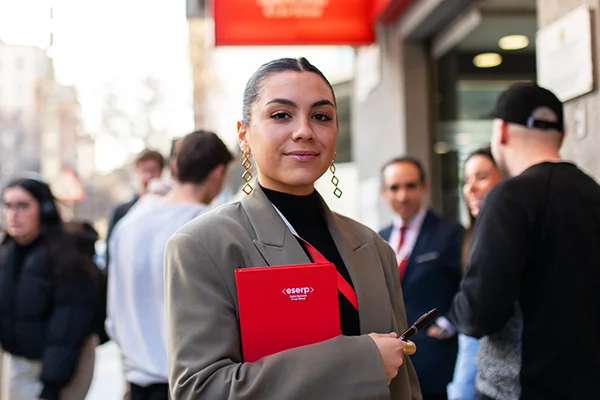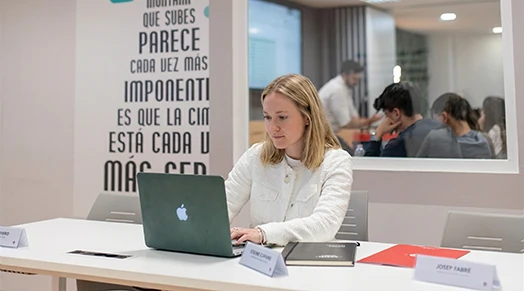
Campus in Madrid
325 days of sunshine a year
Studying in Spain with eserp means personal and professional growth in a diverse, welcoming and high-quality environment.
We know moving to another country involves important arrangements, but at ESERP, you're not alone. We explain the essential steps that every international student must undertake:
All students must have public or private health insurance from an entity authorized to operate in Spain.
Must apply for the European Health Insurance Card in their country and understand its coverage.
Confirm health agreements between your country of origin and Spain. Purchase private health insurance or travel insurance if necessary.
Anyone wishing to study in Spain must apply for a student visa, except for citizens and residents of EU member countries.
Admitted students in an ESERP program may need proof of admission to process their visa or other administrative matters. Request this certificate from the Academic Secretariat or the International Office.
Non-EU/EEA/Swiss Students: No visa is needed.
Nationalities NOT from EU/EEA/Switzerland: A student visa is required. After registration, ESERP will provide an official admission letter needed for visa application at the Spanish embassy in your country.
Check information from the Government of Spain
Once enrolled in a program, or beforehand, you must legalize your diploma via the Hague Convention or the equivalent from your country and submit it to your corresponding ESERP campus before starting your studies.
If your diploma is not in Spanish, ensure it is translated by a certified official translator.
If you are from a Hague Convention signatory country, your degree must be apostilled.
How can I process it?
Click here to see all the information
If your country is not a Hague Convention signatory, your degree must be legalized through diplomatic or consular channels. This method applies to legalizing foreign public documents issued by non-signatory states.
This generally involves each involved authority executing individual legalization of the document.
How can I process it?
If studies were completed in an EU education system or other States with applicable international agreements, you must apply for the Access Credential managed by UNED.
Students from education systems outside the EU, from a State with no agreements.
Unless there is a legal instrument exempting this obligation, all foreign public documents must be legalized to be valid in Spain, and all Spanish public documents require legalization to be valid abroad.
How do I legalize a title?
The recognition of foreign qualifications is a process you will need to complete if you wish to practise a regulated profession in Spain. Here you can find an explanation of how to have your qualification recognised in Spain.
Cuando termines el grado, podrás continuar tu trayectoria académica con nuestro Máster Universitario en Acceso a la Abogacía y Procura, galardonado en la categoría de Formación en la V Edición de los Premios Nacionales De Ley Siglo XXI 2020. Este máster te capacitará para afrontar con garantías el examen oficial de acceso a la abogacía y ejercer como abogado o procurador en todo el territorio nacional.
We know moving to another country involves important arrangements, but at ESERP, you're not alone. We explain the essential steps that every international student must undertake:
After registration, ESERP will provide you with an official admission letter needed for the visa application process at the Spanish Embassy in your country.
Once you arrive in Spain, you must obtain the foreigner's identity card (TIE).
Access ESERP's exclusive Employment Platform for students and alumni. You will find new and exciting job and internship offers daily. You can also apply directly through the platform.
Students from Europe must register with the Spanish authorities and apply for an NIE number. We will provide the necessary information on the procedure.
Learn Spanish!
If you're interested in taking a Spanish course tailored to your level, join our free Spanish classes for ESERP students (subject to demand). Request information at international@eserp.com
If you wish to improve your English or Spanish level before starting your studies with ESERP, a 20-hour intensive course at BCN Languages academies is a great option. Located in Barcelona, Madrid, and Palma de Mallorca, they offer special conditions for ESERP students.
BCN Languages is accredited by institutions like Cambridge English, Eurocenters, CSN Lund Sweden, and Instituto Cervantes, among others.
Una vez se ha inscrito en el programa, o previamente, es obligatorio legalizar su diploma mediante el Convenio de La Haya o el equivalente de su país, y enviarlo a su Sede ESERP correspondiente antes de iniciar sus estudios.
Si su diploma no está en español recuerde que deberá traducirlo por un traductor oficial certificado.
Si usted es ciudadano de un país firmante del Convenio de la Haya debe apostillar su título.
¿Cómo puedo tramitarlo?
Haz click aquí para ver toda la información
Si usted es ciudadano de un país no integrante del Convenio de la Haya, debe legalizar su título por vía diplomática o consular. Este es el procedimiento que se aplica para legalizar los documentos públicos extranjeros emitidos por Estados no firmantes de convenios.
Por lo general, consiste en que cada una de las autoridades implicadas ejecute una legalización a título individual del documento.
¿Cómo puedo tramitarlo?
Si los estudios se han cursado en un sistema educativo de la UE o en otros Estados con los que se hayan suscrito acuerdos internacionales aplicables a este respecto deben solicitar la Credencial de Acceso que gestiona la UNED.
Los estudiantes procedentes de sistemas educativos externos a la UE, de un Estado con el que no hay acuerdos suscritos.
A no ser que exista algún instrumento jurídico que exima de esa obligación, todo documento público extranjero debe ser legalizado para tener validez en España y todo documento público español requiere ser legalizado para ser válido en el extranjero.
¿Cómo legalizo un título?
Accederás a una metodología actualizada orientada a la práctica jurídica desde el primer curso:
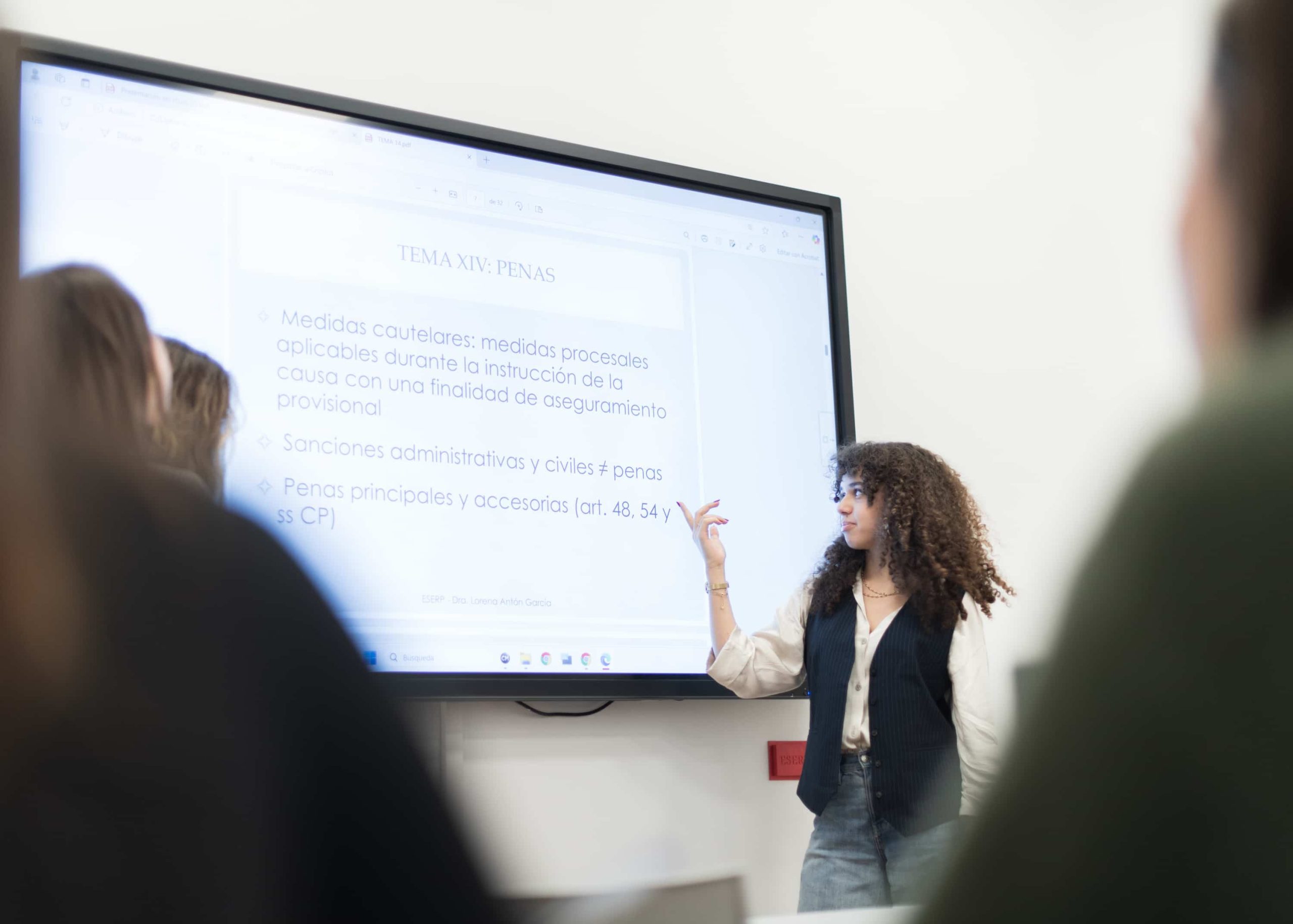
Cuando termines el grado, podrás continuar tu trayectoria académica con nuestro Máster Universitario en Acceso a la Abogacía y Procura, galardonado en la categoría de Formación en la V Edición de los Premios Nacionales De Ley Siglo XXI 2020. Este máster te capacitará para afrontar con garantías el examen oficial de acceso a la abogacía y ejercer como abogado o procurador en todo el territorio nacional.

The enrollment process for international students is adapted to formalize registration easily, from your country of origin or already in Spain.
In Spain, meals are late: lunch is between 2 and 4 p.m., and dinner after 9. The Mediterranean diet is followed, with light breakfasts and dinners and a main lunch. Having coffee mid-morning and going out for drinks after work are common practices.
Spaniards tend to be direct but also warm and welcoming. A handshake is common when meeting someone, but among acquaintances, kisses, hugs, or pats on the back are common.
Tipping is not mandatory in Spain, but it is common to do so if the service was good.
Take it easy: in Spain, life is relaxed, and people enjoy the day-to-day without hurry. Social life especially takes place outdoors, especially in spring and summer. There are plans and activities for all tastes, even for the most demanding.
If you have questions about any of these topics, remember you can contact us in the International Department and we'll assist you.